Showing posts with label bears. Show all posts

Thursday, July 25, 2024

I Sleep With My Food

Note: Originally published in 2015. While this post doesn't have the standard satirrific tone of the usual NHTM post, I wanted to do something with it, and FB notes (its original home) has become harder to find than my headlamp when I'm on an overnight.

Since writing this I have switched to using a bear canister, because maintaining possession of my food at all times -- even when going to the privy -- became more annoying than carrying a wee bit of extra weight. But I still believe that bear bagging is the worst method of food storage possible,  short of just throwing it on the ground wherever.


I sleep with my food.  There.  I said it.

I’ve slept with my food in my tent while hiking in twenty-two different states, including ones that have Grizzlies.  When legally required, I’ve used bear canisters (Kings Canyon, Yosemite) and hung food (Yellowstone).  I’ve used bear boxes (New Jersey on the AT) as well as Bear Cables (GSMNP) and Bear Poles (SNP).  But otherwise, I sleep with my food.  And so do a lot of other people.

Why?  Simply put, I believe it to be the best strategy for protecting bears.
This statement is probably viewed incredulously by people who have been told over and over again by official agencies that sleeping with your food is a terrible idea, and that people who do it are lazy, irresponsible, and part of the problem.  But stick with me, and I’ll explain my line of thinking.

I believe that one of the reasons that official sites post the proper hanging of food as a best practice doesn’t necessarily have anything to do with the efficacy of hanging food as a deterrent versus other methods of food storage.  I think it has more to do with the perceived safety of the hiker, and the potential liability involved in the event of an attack rather than the result of any studies.

Which is to say, keeping your food in your tent could be 1,000 times more likely to prevent a bear from getting your food, and authorities would still never suggest it due to the relative potentially bad outcome (in the woods and in a courtroom) should a bear invade a tent, regardless of how unlikely that might be statistically.  So if sleeping with your food decreases the chances of a bear getting it by a great margin, but increases only slightly the chance of you having an encounter with a bear, it won’t be recommended -- and that's true even if it's just the perception of an increase.
Funny enough, there's one group of authorities who will admit that hanging food is ineffective.  And those authorities are in places that require the use of bear canisters.

I have often thought that hanging food isn’t necessarily about keeping food away from bears, but rather keeping bears away from people while they attempt to get people’s food.  The argument would say something to the effect of, “well, the bear got my food, but at least I’m okay.”  People who hang food aren’t terrified that a bear might get their food if they slept with it, but rather of what a bear might do to them while it was getting their food if they slept with it. Which is one of the reasons you end up with this sort of thing.

Much of what we do regarding bears and food is, as with water treatment, faith-based.  If you hang food with success you are convinced that hanging food is why a bear didn’t get your food, whether there is a bear in the area or not.  If you sleep with your food, and are never attacked, you believe that sleeping with your food is a successful strategy.  When a bear does get food that is hung, the assumption on the part of those who hang food is that the food was improperly hung.  Why?  Because they have faith that a bear cannot get to properly hung food -- even though there are bears that have proven that they can learn to defeat just about any unattended system of protecting food (including bear canisters).

As for bears invading tents, it’s incredibly rare, despite the fact that at some point in a trip everything you own probably smells like food.  On the very rare occasions that it does happen the first question anyone asks is, “did the hiker have food in their tent?”  Why?  Because people like to find a cause that tells then that they are relatively safe from this kind of thing, so that they can tell themselves that they don’t have to be afraid.  “He had food in his tent and was attacked, I do not have food in my tent and therefore won’t be attacked.”

But even if you don’t have food in your tent, you still probably smell like food.  You’ve spilled it on your clothing, you’ve stored it (and trash) in your backpack and your pockets, you’ve got some on your hands, your beard, your mouth.  It’s not like you’re taking a shower every day, and storing toothpaste and sunscreen in your bearhang bag doesn't make your breath smell less like toothpaste or your skin smell less like sunscreen.  Putting all “smellables” in a bag doesn’t mean your tent and its contents don’t smell like food.  Funny enough, I've seen recommendations that included in the "smellables" you're supposed to hang are the clothes you cooked in.  Ever seen anyone do that?  I haven't.  Ultimately, actually having food in your tent might not make it smell any more like food than not having it in your tent.

But there’s not much you can do about that, right?  So you do what you can to minimize bad encounters, including (if you're like me) not cooking in camp and avoiding established campsites unless required to use them.  And if your food doesn’t get taken and you remain unharmed, then whatever you’ve done worked (at least in your mind).  Even if there were never any bears near you.

Are people who sleep with their food irresponsible and lazy?  Undoubtedly some are.  And then there are others who believe that it’s a better way of dealing with food and take maintaining possession at all times seriously, which, believe it or not, takes a fair amount of effort.  Do I have any statistical evidence to back up my belief that bears recognize possession as ownership, and that they are more likely to go after hung, non-attended food rather than expend the energy to attack another animal to take its food?  Nope.  But then again, people who believe hanging is the best strategy don’t have any statistical analysis to back up their belief, either.  If anyone has actual data showing that hanging food is a more effective strategy, I've never seen it.  And no one has ever really successfully explained -- if maintaining possession is a bad strategy -- what hikers are supposed to do with their food while actually hiking.  It's right there.  In your backpack.  Why aren't hikers constantly being assaulted by bears while walking?

And though many people will (rightly) cite food rewards as a thing that leads to future problems for humans and death for bears, another thing no one has successfully explained is how a food reward a bear doesn't get makes a bear more likely to attack someone else, either near a tent with food in it or on the site at some point in the future.

Anecdotally, I can look at the situation on the Appalachian Trail in Georgia and note that the bear or bears who get hikers’ food are getting it exclusively from bear hangs.  Is the food improperly hung?  Probably, but not necessarily.  Does it occur to any of those hikers to sue the ATC or NPS or any other agency for suggesting that hanging food is the best method?  Of course not.

On the other hand, you can imagine how quickly someone (or their family) would engage a lawyer if ATC suggested sleeping with food and a bear invaded a tent, regardless of how unlikely a scenario that might be, particularly if that hiker sustained injuries or was killed.

I sleep with my food.  Should you?  That’s really up to you.  If having food in your tent is going to keep you awake all night, probably not.  In fact, I’ve hung food when I’ve been around other hikers who were so worried about me not doing so that it seemed a kindness to hang my food so they could get some sleep.
I’m not suggesting what anyone else should or shouldn’t do.  I’m explaining my reasoning for what I do, and the fact that it isn’t as lazy or irresponsible as you might have been led to believe.

I sleep with my food because I think it’s safer for the bears.


Coda, added 7/25/24:
What do we say about the people who used to say that those who ignored the officially recommended AT food storage method (bear bagging) were lazy and stupid, who now say that the current officially recommended AT food storage method (bear canister) is heavy and unnecessary? Lazy & stupid or nah?

Wednesday, July 29, 2020

Six Questions To Ask “Budget” Thru-Hikers And One Question To Ask Yourself

One of the questions frequently asked in hiking social media groups is how much it costs to complete a Thru-hike, or more to the point, “is it possible to hike the entire Appalachian Trail on $800?”  And they will definitely get an answer to that question, but unfortunately they will also get 843 other answers to that question.


Invariably, a few of those answers will be hikers saying it’s definitely possible (and I suppose it is), but I suspect the better question is, “yeah, but is it probable?”

I’m not going to answer either of those questions.

What I’m going to do instead is run through six questions you might consider asking someone who says they hiked the trail on what sounds like an extremely low budget, with one question to ask yourself.  Because if you’re like me, those claims always sound a little bit suspicious.  And if the people making those claims are also like me, they’re at least a little bit full of crap.  This isn’t to say that everyone who says they’ve hiked on a small budget is lying about it.  It just might be that they’re leaving some information out.


Sitting in an air-conditioned room drinking beer
and soaking my feet instead of sweating my
nards off in the free camping area in Waynesboro.


When did they hike?       

One of the problems with social media is that you tend not to really know anything about the person answering your questions.  So while the guy who says, “oh, yeah, I hiked the entire AT on a dollar a mile” might not be lying, he might also not think it’s important to point out that he did that in 1983.  It’s not malicious.  Most people know in some part of their brain that things get more expensive, but they don’t really think about how much more expensive, particularly when they remember their hike like it was yesterday.  Which it wasn’t.


And when you point out to someone that “a dollar a mile” in 1983 is about $5,600 now, they’re genuinely shocked.  That’s still a pretty normal amount to spend on a Thru-hike, by the way.  And it’s an incredibly cheap 4-6 month vacation.  A one bedroom rental at the Jersey Shore in the summer will run you about $1K per week.  Just for a place to stay.  Five months worth of weekly Disney passes will run you $11,550.  Just to get into the Park.


Was it their first Thru-hike?
It may not make a lot of sense if you’ve never attempted a long hike, but people who have done one before tend to be the sort of people who can do them for cheaper.  Why?  Dunno.  Maybe they just know all of the budgeting tricks of the trade from the get go.  Maybe they’re doing the same trail again and they know a lot of trail town folks.  Maybe it’s because in between Thru-hikes they live a pretty spartan life anyway, so as to be able to afford another Thru-hike.  If I’m living in the bed of my truck to save rent, staying exclusively in my tent on a hike isn’t as big a deal.  Because neither of them have showers.  Or actual beds.  Or chairs with backs.  But mostly I think it’s because previous Thru-hikers have a better idea of what they need and don’t need to stay happy on trail; they’re not learning about the trail version of themselves as they go.


Note: I can combine these first two questions to give you an example of both at the same time.  ALL of my hikes have cost around $5K.  And I did long, multi-month hikes in 2000, 2008, 2012, and 2015, with the first and last being the Appalachian Trail.  But in 2015 dollars, my first AT Thru cost about $6,800.  And my second one, as mentioned, cost about $5,000.


Are they only telling you what THEY spent?

There’s a case to be made that “what was the total cost of the hike?” is a better question than “what did YOU spend on the hike?”  Because sometimes when you dig into this sort of thing, you discover that, yeah, THEY spent eight hundred bucks.  But their grandparents paid for them to get to and from the trail, their parents bought and shipped all of their food, and they started a GoFundMe in New Hampshire when they ran out of money that pretty much nobody contributed to.  So they “borrowed” five hundred bucks from their Uncle Steve and he is definitely never going to see that money again.  Don’t worry.  Uncle Steve knew.


Everyone says Uncle Steve is too nice.


Did their hike rely on work-for-stay/hiker boxes/mooching?

The former two are strategies for making a hike cheaper; the latter is a strategy for having everyone around you think you’re a monumental pain in the ass.  The problem with the first two is that you really can’t count on them, and therefore they shouldn’t be part of a plan.  Work-for-stay is nice if you want it, but a lot of places you might end up won’t need any work done.  And sometimes you’ll be so exhausted that you don’t want it even if it’s available.


As for hiker boxes, there will occasionally be some nice finds, particularly in places where a lot of people ship food.  And you should always check the hiker box before you head off to do your resupply or get new gear.  My hiking partner found a brand new pair of shoes in Pearisburg right when he needed new shoes. But everyone who’s been on trail knows that hiker boxes are frequently full of stuff the original owner didn’t want, and neither did any other hiker who was there before you.  The mystery bag of white powder is not a myth.  And guess what?  It’s also not powdered milk.  Enjoy your foot-powder breakfast cereal.


So work-for-stay and hiker boxes are solid ways to spend less money while on trail, but they’re not really something I would recommend planning on.

As for mooching, just don’t.  Don’t be that hiker.  Yes, people like you and want you to stick around.  We all know this.  You’re very likable.  At first.  Yes, at first that cool couple you met at that shelter that time and “hey!  We’re all here in town together” will let you use their shower after they’ve used their shower.  Even though that’s theft of services.  And those people you’ve been hiking with for a month?  They’ll definitely let you have a couple of slices of that pizza.  At first.


But pretty soon everyone starts to notice that you never chipped in for that shuttle and you drank half of that case of beer they paid for and I just noticed you’re wearing my rain pants to do laundry and now your balls have been all over the inside of my pants.  Now you’re no longer likable, and at this point nobody wants you around anymore.  Especially me, because that thing with the rain pants was not cool.


How many days was their hike?

One of the best pieces of advice for budget hiking is “a faster hike is a cheaper hike.”  So you might discover that that guy who did a hike for what you think of as pretty cheap also did that hike in 90 days.  And that’s fine.  For some people that’s the kind of pace they want to do.  But are you that kind of person?  Maybe.


Or maybe you’re like me, and the only way you would hike the AT in 90 days is if a series of bears were chasing you the entire time.  Weirdly, I’ve actually gotten faster as I’ve gotten older.  But I’m never really gonna be interested in hiking much more than about a hundred miles a week repeatedly unless I have a really good reason, and I’d rather not have my pace dictated by my budget.


Did they hike the entire trail?

Not really something you’d think you’d have to ask someone who says they’re a Thru-hiker, and yet here we are.  It should go without saying, but someone who only hikes half of the trail on their “Thru-hike” will spend about half of what they would have spent if they hiked the entire trail.  So it doesn’t really matter if they’re “going to go back and get those miles someday” (they’re not).  If they skipped all of Virginia and Pennsylvania you should probably take their budgeting answers with the amount of salt in a Mountain House meal, or at the very least with a grain of salt.  


Unless you’re also planning on skipping all of Virginia and Pennsylvania.


And finally, one question for you:


Do you have a plan for when the plan doesn’t work out?


"Everybody has a plan until they get punched in the mouth.”

                                          —Boxer/Philosopher Mike Tyson


It’s really heartbreaking to see people quit the trail for no other reason than they’re out of money.  I’ve seen it happen a ton of times over the past twenty years.  So, yeah, sure, right now you’re “not out there to spend time in town,” and you’re “going to get into town and then get right out again” and you’re “fine with splitting laundry with five other people and discovering once back on trail -- later that same day -- that you’ve lost half of your socks.”  And maybe all of that will be the case.  Or maybe not.


Maybe after six straight days of cold rain/snow/sleet you’re going to split a hotel room and eat an entire Meat Lover’s Pizza.  While sitting, not standing, in a hot shower.  For 45 minutes.  And then ordering another Meat Lover’s Pizza.  Or maybe you’re going to be in Virginia, chafed to the point of considering field amputation and so encrusted with sweat salt that you’re starting to look like Sean Patrick Flanery in Powder.  And the only thing you want to do for an entire day is ice your crotch and sit in front of an air conditioner going full blast.  While eating a Meat Lover’s Pizza.


Or even more simply — and definitely likely —maybe you’ll discover you really like the people you’re hiking around and you want to stay with them, even though you started out thinking this was going to be your big amazing self-sufficient solo adventure.


Which is to say: it’s fine to plan a “cheap” hike — go for it.  But maybe consider using the same discipline you think you’ll have on trail to save up enough before the trail to deal with the possibility of that plan not happening.


TBW Productions

TBW YouTube Channel

TBW Instagram

Wednesday, December 30, 2015

Night Hiking To Mars Best Of 2015

It has recently become apparent to us here at Night Hiking To Mars that just about every other hiking and outdoor online “news source” puts out a year-end “Best Of” article.


We now think that we’ve done a disservice to the eight people who read this blog by not having our own annual swaggering, self-high-fiving post, considering that we’ve been putting out what is arguably the best online source for outdoor news that probably hasn’t actually happened.

In addition, it occurs to us that an article about our best articles not only requires almost no work on our part, but also allows us to celebrate ourselves in a way that might otherwise come across as unseemly braggadocio.


Some might say that maybe we should leave it to others to judge the quality and impact of what we’ve written.  But can we really trust other people to have good taste?  To be discerning?  To use the royal “we” when referring to the one person who writes these articles?  In this day and age, we say no.

And even if others were capable of all of that, would they highlight the fact that the article appeared in Night Hiking To Mars?  Would they make it clear that the Night Hiking To Mars Blog is always the most important part of the story?  Considering how infrequently anyone gives us credit on Instagram, Facebook, or the internet generally for the naked photos of us running amuck in a Jiffy Lube, we again say no.


So treat yourself.
Sit back, grab a drink, and bask in the awesomeness that was Night Hiking To Mars in 2015 (oh, and make sure to click on all of the links, thus increasing our page views without us really doing anything new at all).  Enjoy!


#5 “Wild” Debates About PCT Overcrowding (Parts One And Two)
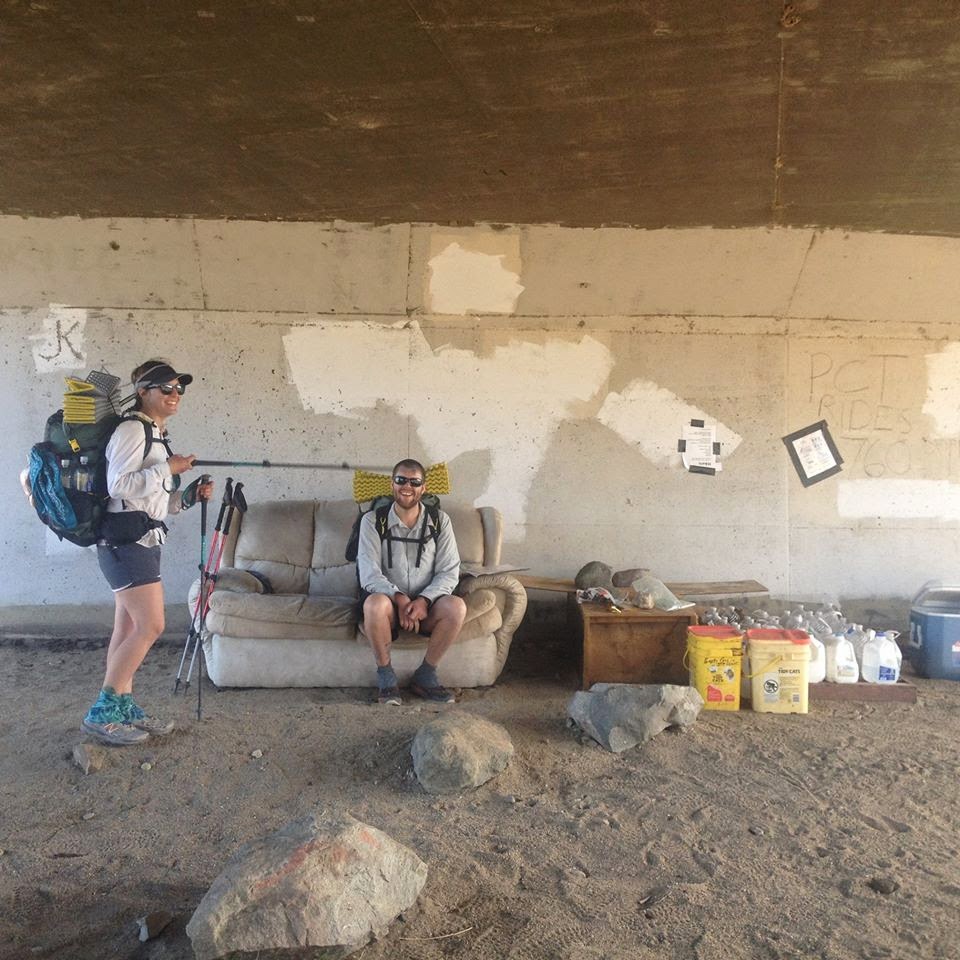
Unique for being a three-part series with only two parts, “Wild” Debates About PCT Overcrowding looked at concerns created by a combination of the release of the movie Wild and people sitting around all winter with nothing better to worry about.  Part One focused on people carrying furniture with them while thru-hiking.  Part Two involved caches of office supplies littering the trail.  Neither one of these concerns seems to have had an actual impact on the trail last season, but that doesn’t mean it isn’t time to panic.


#4  Appalachian Trail: The Sheltered Life
A Guide to sharing space, time, and mice at Appalachian Trail shelters that can best be summed up
by the following: practice LNT, try not to be annoying, bring earplugs.  But there’s more in there, so you should definitely read it -- otherwise, you’ll be unaware of the circumstances under which other hikers might try to eat your dog.


#3 "Bear Selfie" Issue Spreads To The Continental Divide Trail
Bear Selfies are viewed as an increasing problem by land managers worried about the potential for attacks.  This article examines the phenomenon, looks at why Forest Service warnings aren’t working, and asks the question, “where are these bears getting selfie sticks?”


#2 Hiker Claims Fastest Known Time For "Twiple Crown"
Night Hiking To Mars interviews the new Fastest Known Time holder of what is arguably the most prestigious speed record for hiking trail widths in the country.
Which is definitely a thing and not something we just made up.


#1 Night Hiking To Mars Best of 2015
The top spot, as you can imagine, is held by the article about the top articles of 2015.  How could it not be?  It’s literally an article about the best articles.  Sure, the Apple Cake one was useful, and the calendar one was kind of clever, and the A.T. Training one recommended eating Gold Bond, which is probably legally actionable.


But this is the “Best Of” Article.  By its very nature it has to be the best.  You should click on the link and read it again, and then again, and then again.  And we’d say that you should really go on and do this endlessly, like you’re trapped in an M.C. Escher painting or an online argument about tents vs. hammocks, except that you should at least pause and share this article with your friends.  Because, as we think we’ve already mentioned, it’s the best.

Note: Thanks to everyone who helped with the articles this year!  More to come in 2016!


Monday, September 21, 2015

"Bear Selfie" Issue Spreads To The Continental Divide Trail


Bear Selfies are raising concerns about safety on the CDT

On August 28th, 2015, Waterton Canyon, a popular park in Denver, Colorado, was closed due in part to problems with Bear Selfies.  And recently, the U.S. Forest Service's Lake Tahoe Basin Management Unit has issued warnings regarding Bear Selfies, noting that “it is presenting a safety issue.  We are afraid someone is going to get attacked.”

And now "Bear Selfies" are becoming an issue on the Continental Divide Trail.

In the past, encounters with Grizzlies along the CDT in Wyoming and Montana have been rare, and photos few and far between.  But that’s changed recently, and the proof is appearing on social media.


“I get out on the CDT a lot and yeah, they’re showing up, getting some hikers in the background, snapping a few shots,” says hiker Paul “Mags” Magnanti, “I have no idea why they think this is a good idea.  It’s weird.  Really, really weird.”


Bears taking selfies have been spotted as far south as the Wind River Range

Weird perhaps, but definitely dangerous, according to CDTC Trail Information Assistant Liz Thomas:
  “The fact that these bears are comfortable enough around humans to not only approach that close but to turn their backs on them?  These are bears that have become dangerously habituated to humans.  And Facebook and Twitter and Instagram.”

A bear violating the number one safety rule for animals:
NEVER turn your back on humans
Despite multiple warnings issued by the Forest Service, the bears continue to put themselves in dangerous situations.  “Honestly, you can warn the bears all you want about the possibility of serious injury or death if they get too close,” says spokesperson Scott Glenn, “but ultimately it doesn’t seem to matter.  They’re going to do whatever they want, because they’re bears.

Also, it turns out they apparently don’t  understand English and can't read signs.”


When asked about the possibility of closing the trail, CDTC Managing Director Teresa Martinez noted, “attempting to close the entire trail in two states would be a logistical nightmare and a last resort, and we’re really hoping the bears will just wise up and knock it off.  In the meantime, we’re honestly trying to figure out how bears this dumb could afford smart phones and selfie sticks.”


At least they're not Bear Instagram Food Photos.  Yet.

Note: As usual, the names are real but the quotes are fake.  Thanks to all those who gave me permission to use their names for these articles!